Newsletter Subscribe
Enter your email address below and subscribe to our newsletter

Enter your email address below and subscribe to our newsletter
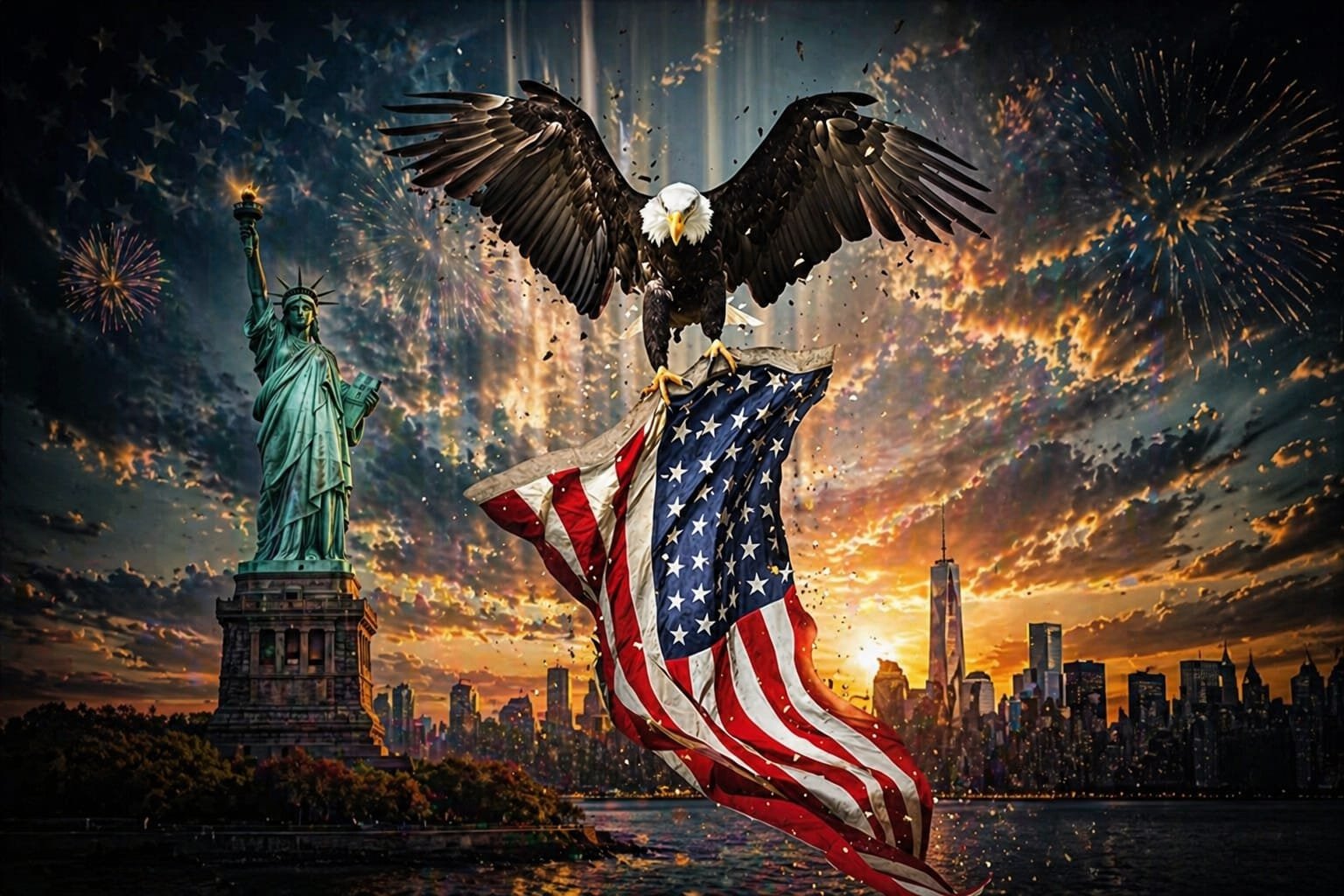
An important event is unfolding in how power is distributed internationally, but many individuals are sensing this shift without clearly being able to identify exactly what it is. For over seven decades, the international system has been based on certain assumptions. No longer are these assumptions as reliable. While there is no doubt that a new world order is developing, the question remains:
What will this new world order look like? Who will be at its helm?
The answer to “Who Rules the World?” was for decades an easy one: The United States. This country possessed unmatched military might, was the founder of virtually all major international organizations (the IMF, the World Bank, NATO, etc.), and was the protector of the U.S.-backed dollar-based global economy. The U.S.’s ability to exert influence was not limited to aircraft carriers; the U.S. had a presence in virtually every international institution and backroom diplomatic channel that maintained alliances.
However, something has changed. And while this change cannot be attributed solely to one presidency, one war, or one financial collapse, it represents a fundamental change in how nations interact with each other.
To grasp what is coming next, one has to first understand how we arrived at this point. After WWII, the United States emerged as the sole remaining major economy. Much of Europe lay in ruins. Some parts of Asia were recovering. The Soviet Union was a rival for influence, not an alternative.
It did not simply “win” a war; Washington deliberately planned the new world order. In 1944, the Bretton Woods agreement established global currencies against the US dollar. Through the Marshall Plan, America helped rebuild Western Europe while binding its allies to the direction of American economic hegemony. NATO created a military alliance with Europe that would last long after the Cold War. And the UN granted the US a permanent veto on all of the major international decisions.
The structure that had been built was deliberate, forward-thinking, and extremely successful.
However, there are cracks beginning to show. There have been wars (Afghanistan & Iraq) and then the 2008 financial collapse, which began in NY but also felt around the globe. The loss of credibility of America’s foreign policy and capitalistic system has taken damage that could not be entirely repaired through a couple of decades of propaganda.
Geopolitics is essentially an enormous chess match, with every large player constantly thinking about multiple next moves. At this moment in time, however, there are numerous players who have determined that they can no longer utilize the older style of playing this game.
China’s Long Game
The story of China’s ascension to a global superpower is the single most significant event taking place within the field of international relations today.
In 1990, China’s Gross Domestic Product was approximately $360 billion. As of 2022, China’s Gross Domestic Product is well over $18 trillion and ranked second in the world behind only the United States. However, China has done more than simply increase its economy. China has taken the time to develop new systems of power.
It should be noted that Beijing has openly discussed its plans to undermine the long-standing position of the U.S. Dollar as the primary currency used internationally. A key component of Beijing’s strategy to accomplish this goal involves its efforts to establish the Yuan as a viable replacement for the U.S. Dollar in international trade. The establishment of yuan-denominated oil trades, referred to as the “petro-yuan,” represents a direct attack against the petrodollar system that has supported the financial interests of the United States since 1973.
The Russian Disruption
Russia cannot challenge China economically; however, this does not matter. Russia’s goal is to disrupt rather than create. When Russia invaded Ukraine, it destroyed the new European Security Order created after the Cold War and caused all countries of the world to decide whether to support one side or remain neutral.
SWIFT Banking Sanctions imposed on Russia to isolate Russia, instead caused a worldwide discussion regarding dependence on dollars. Although India continued to purchase Russian oil and China strengthened its economic relations with Russia, most countries in the Global South declined to vote for Western-led resolutions condemning Russia at the United Nations.
This abstaining is itself a political position.
One of the largest shifts in world-wide power politics has gone relatively unreported; the increasing confidence of what’s broadly referred to as the “Global South” (a collection of nations from Africa, Latin America, Southeast Asia, and the Middle East) whose history for much of the last century was defined by being subject to the decisions of other powers.
The Global South countries are no longer going to follow this same script.
◆ Did You Know?
The BRICS group now represents over 40% of the world’s population and roughly 36% of global GDP (by purchasing power parity), surpassing the G7’s share for the first time in history.
This isn’t a footnote. It’s a fundamental shift in economic weight, and economic weight eventually becomes political leverage.
India, Brazil, Indonesia, Saudi Arabia, and Turkey have all sought “strategic autonomy,” which means they will build relationships with both Washington and Beijing and play one against the other. Strategic Autonomy is a type of advanced geopolitical hedging that could not be accomplished (or if it could, it wouldn’t have made sense) during the Cold War.
Of all the pillars of U.S. global power, none is as important or quietly under threat as the dollar’s status as the world’s reserve currency.
In essence, the world purchases oil with U.S. dollars; it keeps its savings in U.S. dollars; and it settles international trade in U.S. dollars. Therefore, there is ongoing global demand for U.S. currency. This allows the United States to continue running budget deficits while funding its military, and ultimately allows the U.S. to use an unparalleled level of military and economic power compared to other countries. Economists often refer to this structural advantage as the “exorbitant privilege” of having a reserve currency.
That exorbitant privilege is now being intentionally contested by nations, including China and Brazil (China and Brazil completed their first bilateral transaction using Chinese Yuan in 2023). In addition, Saudi Arabia has started talking with countries regarding pricing some oil exports in non-dollar currencies. Additionally, central banks around the world have begun to slowly reduce their dollar-based reserves – not abandon them, just begin to diversify their holdings. None of these actions presents an immediate risk of collapsing the value of the dollar. However, based on current trends and actions taken by various countries/central banks, it appears likely that the emerging financial architecture of the world will include more regionalized currency blocks and potentially several reserve currencies vying for prominence.
Honest assessments require nuanced views. Declaring that America has reached the end of an “era” sounds like an exciting headline; however, what really exists today is much more complicated.
In terms of military spending, the United States currently allocates more money for defense than the next nine countries combined. The dollar makes up approximately 58% of all of the foreign-exchange reserves around the globe. The best technology companies (Silicon Valley), schools (universities), and banks (financial institutions) in the world continue to be based in the U.S. Additionally, NATO continued to stand united during Russia’s recent invasion of Ukraine, and at one point was considering adding additional members, including Finland and Sweden as well.
While America has seen a decline in relative strength, there is also evidence suggesting that America is still quite powerful when compared to many other nations. What is evolving with America’s power is not so much an absolute loss of power; it is more likely that America will see a decline in how others perceive America’s power. In the past few years, we have witnessed a significant rise in the number of countries that believe they can successfully challenge U.S. leadership. A new world order is being established that is post-American in nature (i.e., multipolar and more negotiated vs. commanded).
Military: While the U.S. remains the leading country militarily, we are no longer uncontested, particularly in Asia/Pacific
Economic: China’s Gross Domestic Product (GDP) could surpass that of the U.S. by this decade if a particular measure is utilized
Diplomatic: There appears to be less and less buy-in from countries regarding the idea of a “rules-based international order,” even among those countries that are typically considered allies
Technological: With regards to artificial intelligence, semiconductor production, and quantum computing, the competition between the U.S. and other countries has created a genuine battle for technological superiority.
There are many arguments about what will be the direction of the world in terms of polarity; whether we will have a bipolar system (the U.S. as one pole and China as the other) or a multi polar system (multiple poles with various countries having the ability to compete); or perhaps a fragmented type of world known as a “no-polar” world where there is no country able to dominate due to the diffusion of power among so many actors.
Most likely based on present trends, a world that can best be described as a “contested multipolarity”, a world where multiple powerful nations do not allow one dominant nation to set the rules of play throughout the entire world. Rather than seeing this as a king at the top of a chess board, it may be viewed as a table of competitors, all playing cards using their own hands and sets of alliances and knowing each other’s tells. This does not necessarily lend itself to being a more peaceful world. A multipolar world could potentially result in greater instability, more conflict at the regional level, and more diplomatic tension.
One of the reasons why America has enjoyed relative stability during its period of unipolarity, despite it being a flawed system, was that the rules were clearly defined, although they were poorly enforced. In contrast, a world in which multiple major nations would be setting the rules of play, the definition of those rules themselves would be a matter of dispute. And that is when the potential becomes truly unpredictable.
The end of America’s global supremacy won’t come in a blaze of glory. Instead, the transition toward something as a new world order is happening gradually, unevenly, and without a clear heir apparent. It isn’t China’s growing power. Nor Russia’s bid to undo everything from World War II. Or even some single-minded ideology. It is the increasing complexity of the world itself.
The emerging global new world order will require people (both citizenry and leadership) to become comfortable with something they have always found difficult: holding two contradictory positions at once. Building coalitions with other countries whose membership changes as issues arise. And accepting that winning internationally no longer means being the dominant player, but rather remaining relevant over time.
This moment bears an uncanny resemblance to another in history. A similar period occurred in the last quarter of the nineteenth century when Britain was beginning its slow descent into obscurity, and various rising nations were jockeying for place. This previous transition concluded in 1914. Hopefully, the next one will have a peaceful conclusion.
Never before has there been so much uncertainty about who will be the leader of the free world. Depending upon how you view this situation, whether you see it as distressingly uncertain or an exciting time in international politics, this may well be the most significant geopolitical event of a generation.
How is the New World Order being defined in terms of geopolitics?
The “New World Order,” in terms of geopolitics, defines the current transformation in how the distribution of global power is organized and allocated. The “New World Order” refers to the move from an American-led post-World War II unipolar model toward a more multipolar world with independent roles for China, Russia, the European Union, and the Global South. The “New World Order” includes such areas as the nature of military alliances, the nature of economic relationships, the nature of international institutions, and the norms that govern conflict and diplomacy.
Is China taking over the United States’ position as the world’s superpower?
Not yet nor likely ever in the classical sense. While China has become a powerful economy and military force, it is not displacing U.S. leadership so much as constraining it. The new world order will be multipolar rather than a simple transfer. China is becoming a leader in manufacturing, infrastructure investment, and increasingly in technology, while the U.S. retains superiority in military reach, financial structure, and soft power. The likelihood of China directly supplanting U.S. leadership is low.
Why is the U.S. dollar’s role as the de facto world currency so critical to the balance of global power?
The dollar’s function as the world’s leading reserve currency provides the U.S. with an advantage that economists refer to as “exorbitant privilege.” With this exorbitant privilege comes the ability to engage in greater deficit spending, finance its military at levels never before seen, and impose financial sanctions (such as those imposed against Russia via SWIFT) that no other nation could have used with comparable effectiveness. Should there be a loss of significant reserve status for dollars among alternative currencies (e.g., yuan, euro, or BRICS), then U.S. foreign policy capabilities would be limited.
What is the BRICS group, and what significance does it hold?
Originally referred to as Brazil-Russia-India-China-South Africa (the acronym stands for BRIC), the BRICS were a collective of major emerging economies. By 2024, BRICS was enlarged to add Saudi Arabia, the UAE, Egypt, Ethiopia, and Iran. Combined, they represent over 40 percent of the world population and a rising percentage of world GDP. BRICS holds importance due to its explicit efforts to create economic and diplomatic counterweights to Western-based organizations such as the G7, the IMF, and the World Bank.
Is a multipolar world more dangerous than a unipolar world?
Historians argue about this passionately. In a unipolar world, where one state is dominant, it may be stable because the rules are enforced by that one state. However, it also generates resentment among others who feel powerless and generates unaccountable power for that state. On the other hand, a multipolar world presents more obstacles to states acting aggressively; however, it also produces many additional friction points and potential sources of conflict, including proxy wars, creating both uncertainty and more possibilities for conflict.
The two most violent periods in modern history, prior to World War I and World War II, took place when there were shifts in the way global power was distributed, exactly what is happening now, making this period so pivotal to understanding and studying.
If you want to dive deeper into how rising tensions and shifting alliances could shape the future, check out our detailed analysis: Will World War III Happen? The Changing Global Map Explained!
Disclaimer: This article is for informational and educational purposes only. It reflects analysis based on publicly available geopolitical developments and does not constitute prediction or professional advice.