Newsletter Subscribe
Enter your email address below and subscribe to our newsletter

Enter your email address below and subscribe to our newsletter
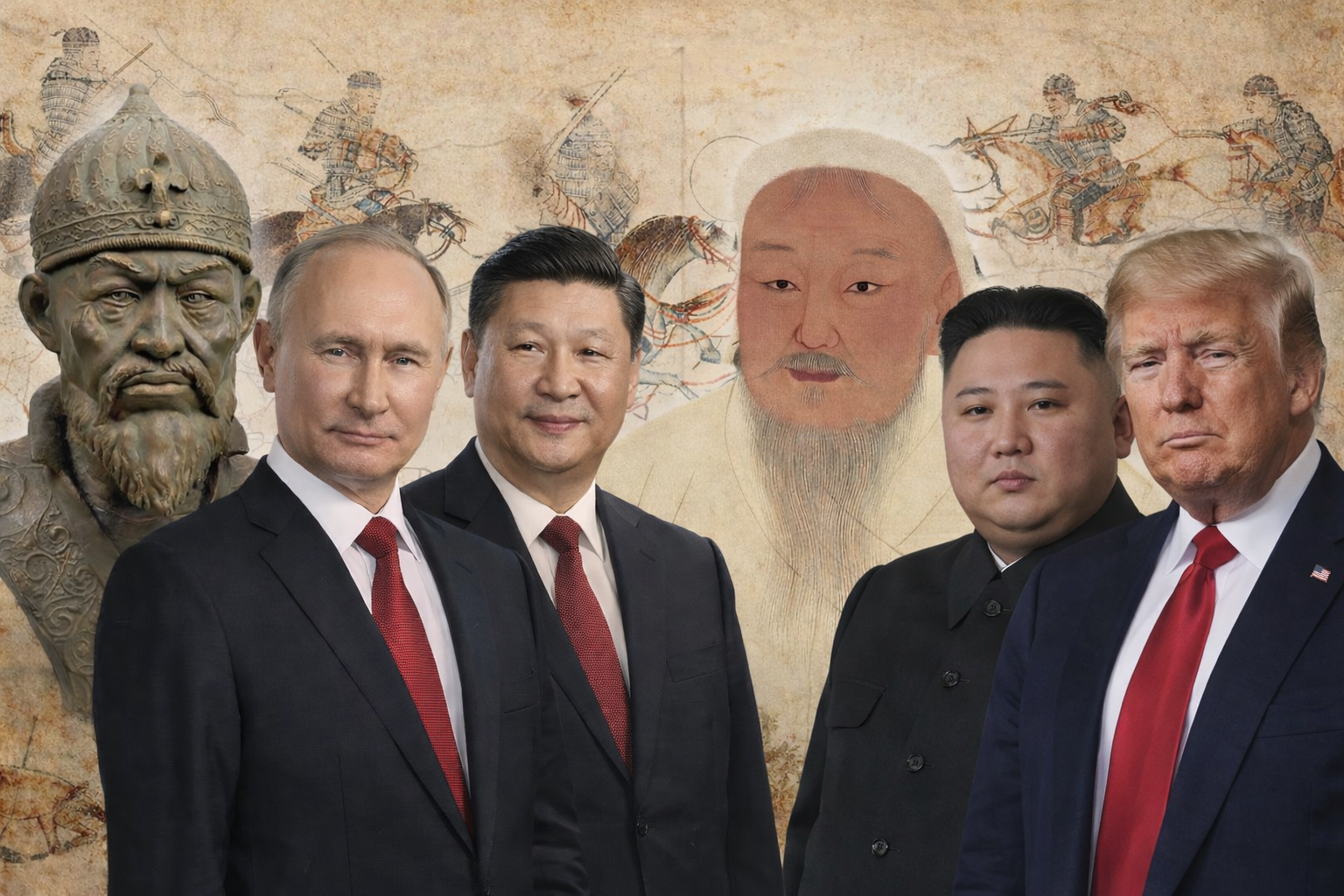
“Can there be a Next Genghis Khan? Someone who can disrupt the world we live in today, using the same tactics of conquest but with all the weapons of the 21st century?”
Genghis Khan, unlike other empires, didn’t just conquer new land; he created a new form of power that would influence how civilizations are structured for thousands of years. Over eight hundred years ago, even the best historians were debating the nature of this Mongol Empire founder; was he a great leader, or a monstrous one?
However, the real question is being asked by geopolitical scholars today: Can it happen again?
Genghis Khan is most often portrayed by historians as a warlord who rode across vast stretches of land with a fierce sword. Brutality does appear to have been one of his true characteristics. He and his armies are believed to have caused approximately 40 million deaths during their campaigns—approximately 10 percent of all persons alive in that era. The time for some of the lands they ravaged would take centuries to recover.
If you remove the gore and flames, however, you will see a much greater story, a strategist.
He was born about 1162 AD as Temüjin in the Mongolian steppes. This man went from living a life of poverty and captivity to unifying many warring tribes into a single tribe. In itself, this was no ordinary feat. It was what happened after that which shaped the course of modern history.
DID YOU KNOW?
The largest contiguous empire on earth was the Mongolian Empire under Genghis Khan, and it spanned approximately 24 million sq km from the Pacific Ocean to Eastern Europe.
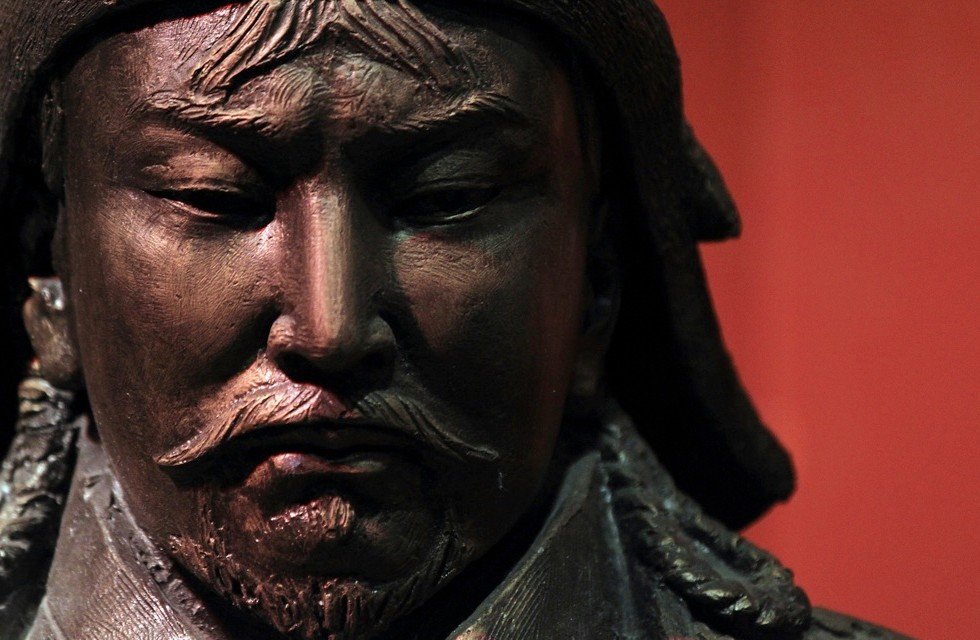
To assess if there is an opportunity for a contemporary leader to follow the path of Genghis Khan and make the same impact he did during his time on Earth, first, we have to establish what we mean by that. We’re not talking about building a horde of horses and going around ransacking cities. We’re discussing the basic elements that allowed Genghis to accomplish what he accomplished.
Historians and political scientists have occasionally floated comparisons. None is perfect. But they’re worth examining honestly.
Vladimir Putin is often compared and considered the next Genghis Khan due to similarities in both leaders’ strategic approaches toward regional domination. While Putin’s methods differ from those employed by the Mongol Empire, they also exhibit many similarities.
Historically, Putin has sought to restore Russia’s former status through a combination of energy dependence on other nations, a significant military presence throughout Eastern Europe, cyber warfare, and politically-motivated interventions.
Similarities exist between these actions and some of the strategies employed by Genghis Khan; however, there are key differences. Genghis Khan was successful in establishing and expanding his vast empire, while Putin’s attempts at expansion (most notably his 2022 invasion of Ukraine) were met with international condemnation and internal challenges for Russia. As such, Putin cannot establish himself as a viable alternative to Genghis Khan, who was able to successfully conquer multiple neighboring regions without being challenged by them.
Xi Jinping is another world leader whose approach is similar to that of Genghis Khan. Xi Jinping has established control within China similar to how Genghis Khan controlled the Mongolian region. Xi Jinping has eliminated presidential term limitations and has reestablished personal control over China’s military.
Additionally, he is employing a massive foreign policy initiative known as the Belt and Road Initiative, which includes a multi-trillion-dollar investment plan that will extend Chinese influence into over 140 countries.
Like Genghis Khan, Xi Jinping understands the concept of creating an empire based on contracts rather than simply invading a nation. Xi Jinping is using this strategy to create a vast network of dependent nations in the Asia-Pacific region, including Taiwan. He is also utilizing China’s growing economic influence around the globe to exert pressure on smaller nations. This strategy follows a very similar model developed by Genghis Khan when he created a vast empire based on dependency.
Beginning with some honesty in the analysis, there are many structural constraints today that Genghis Khan did not face, and those structural constraints will significantly affect any attempt at building a modern-day “empire”.
1. Nuclear Deterrence
In the 13th century, Genghis Khan could attack Baghdad with 150,000 horsemen and destroy it. And no one would be able to prevent him from doing so. Today, Nine (9) Nations possess Nuclear Weapons. Any leader who attempts to conquer an entire territory of a nation that possesses nuclear weapons is going to be annihilated. This is not deterrence; this is a hard limit to ambitions.
2. International Institutions and Media
There exists today a United Nations, the International Criminal Court, NATO, and a Global, 24-hour / day news cycle. These international institutions and a global media presence created the type of accountability structure(s) that did not exist during the 13th century. While these institutional mechanisms do not provide perfect accountability and often appear as farcical as they can be, they add layers of complexity to any attempt by a Nation-State or entity attempting to invade another Nation-State. Thus, while the 13th century had its share of complex relationships among Nation States, the relationship among Nation States has become much more complicated since then.
3. Economic Interdependence
Today’s Economies are interconnected economically. Therefore, when one Nation-State begins to seriously wage war against another Nation-State, it creates catastrophic financial consequences for the invading Nation-State. The Russian Sanctions Experience following 2022 clearly illustrates this point. Building a Global Empire would require tearing apart decades of economic interconnectedness amongst all Nation-States, which appears virtually impossible to accomplish.
The really scary thing about all these constraints is that they all depend on the same international system remaining intact as it has been since WWII.
So what happens if it does not remain that way?
Right now, climate change is putting pressure on the production and availability of food and water resources at levels that have never occurred before but have historically preceded mass violence. Artificial Intelligence is creating economic disruptions in ways much faster than governments’ ability to respond. And populist movements are undermining confidence in institutions throughout both developed and underdeveloped countries.
Genghis Khan did not rise in an intact environment; he rose in a collapsed one. The old, powerful societies were weakening, the new rules were breaking down, and there was a void left by legitimate authority open enough for a very smart and ruthless leader to walk into.
If we were to experience another collapse of the international system, which many serious scholars believe is more likely than people realize, then the structural obstacles mentioned above would be broken down more quickly than many will expect.
I think one of the most valuable lessons we can take away from Genghis Khan was not how he conquered, but rather what created the environment that allowed his rise.
The biggest difference between great disruptors (those who are able to significantly alter the status quo) and all others is that they do not create the environment that allows them to succeed; they simply discover it. Genghis Khan did not fracture Asia into several smaller states. He discovered the fractured state of Asia and used this knowledge with incredible accuracy to exploit it for his own purposes.
It is not so much whether there exists today or has ever existed a political leader who seeks to emulate the example of Genghis Khan. There certainly have been many such individuals throughout history, but history clearly shows us that these people typically fail. What is significant is whether the world will create the environmental conditions that contributed to making the next Genghis Khan possible.
A fragmented distribution of power. Weak governmental structures. Technologically advanced tools at the disposal of an individual leader. An impoverished population that yearns for a strong leader to provide direction and guidance.
We can easily identify each of these factors already beginning to develop in our world.
The Khan Isn’t Coming. Or Is He?
Can any current political leader become the “next Genghis Khan”? Certainly not literally; the era of continent-wide military conquest by means of mounted troops has come to an end. Such types of expansions are simply impossible under conditions of nuclear armament, International Law, and Economic Interdependencies in a stable world.
However, in the deeper sense, as with the potential for one person to reshape the world order through a combination of strategic thinking, ruthless practicality, and taking advantage of a fragmented world? This remains on the table.
Whether the next Genghis Khan rides horses or sits at a computer screen manipulating algorithms, economies, militaries, etc., all simultaneously. Whether he builds large-scale infrastructure projects across multiple continents, writes new Constitutions removing term limits from existing positions of power, or uses artificial intelligence to make decisions before his opponents can respond.
Or, he may not even have been born yet. However, if there is anything that history has taught us, it is this: Empires do not announce their arrival. They appear while the rest of the world is not paying attention to them.
Are we paying attention?
Who is the modern equivalent of becoming the next Genghis Khan?
Xi Jinping’s ability to establish a powerful position for himself over time, as well as his global economic strategy, are the two aspects of Xi Jinping’s actions that have the greatest similarity and can be considered the next Genghis Khan. Comparisons are made by many political analysts regarding other world leaders, such as Vladimir Putin (due to his assertive military policy) and Mohammed Bin Salman (as he has demonstrated an extreme level of ambition regarding rapidly establishing his influence on the region).
Could a world empire like the Mongol Empire exist today?
It can be said that no one could build a traditional territorial empire today because of weapons technology (i.e., nuclear deterrence), international institutions, and economic relationships that create mutual dependencies. It can further be stated that there are indeed modern economic and technological forms of empire where one country uses its control of another country via debt, data, or dependency.
Is Xi Jinping the next Genghis Khan?
Historical analogies are made by some authors relating Xi Jinping’s consolidation of his own power and China’s large-scale expansion plans under “Belt and Road” to classic examples of empire building. However, it cannot be emphasized enough how significantly different China functions from how the Mongols did. While some elements may appear similar to be considered, the next Genghis Khan, they do not share the same system-wide structure; therefore, the similarities exist structurally rather than literally.
Want More Guides on Historical Analysis? Check out this One