Newsletter Subscribe
Enter your email address below and subscribe to our newsletter

Enter your email address below and subscribe to our newsletter
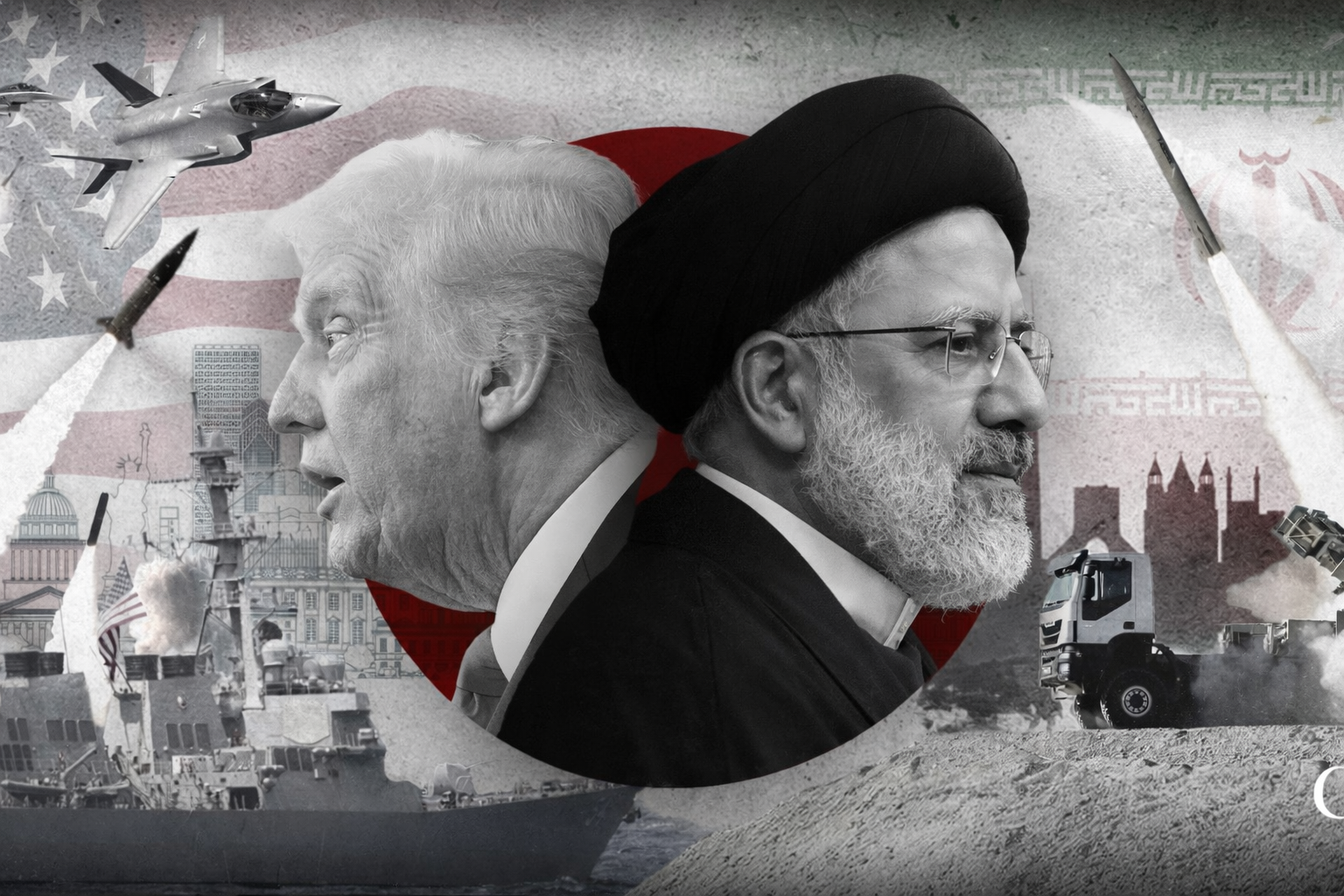
At a negotiation table sits an American country on one side and an Iranian country on the other; both have grenades in hand and are looking for the other to “blinker” so that they can get out. This describes the U.S.-Iran nuclear gamble for almost two decades. And then, in 2025 and 2026, the grenade exploded.
The U.S.
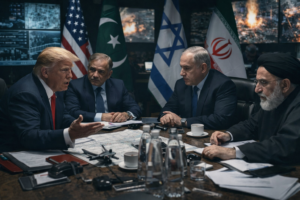
-Iran nuclear crisis, known today by many experts as The Nuclear Gamble, is not simply about uranium or centrifuges, but rather about power, survival, ideology, and the very frightening questions that global citizens need to ask themselves today. What will happen if the World’s Most Powerful Military encounters one of the World’s Most Defiant Regimes and neither wants to give up?
This is not ancient history. As of April 2026, there is a tenuous two-week ceasefire agreement. But the smoldering embers of one of the largest and most explosive Geopolitical Crises in recent memory remain. Therefore, let us travel back to where it all began to see how we arrived at this point and what all this represents for the future of our planet.
The events in the Iranian Revolution of 1979 are crucial to understanding “The Nuclear Gamble.” In 1979, a revolution led by Ayatollah Khomeini led to the removal of the U.S.-backed Shah, which created an enduring rift in U.S. – Iranian relations. When, during this time, Iranian authorities took 52 American diplomats hostage for 444 days, it created a lasting distrust between the two countries.
Iran learned a valuable lesson after the devastating eight years of war with Iraq (1980-1988), which is that developing weapons of mass destruction, or even being able to create weapons of mass destruction, creates the most effective deterrent. Iran saw how Iraq used chemical weapons on Iranian soldiers with virtually no consequences. Iran did not want to be left without defenses again.
By the early 2000s, Iran had built out its nuclear capabilities, including uranium enrichment sites, heavy water reactors, and a significant stockpile of uranium. This development in Iran caused many countries to take notice, and thus, the chess match between the world and Iran began.
Diplomacy had a major success with the Iran agreement in 2015. That year, after many years of difficult diplomatic negotiations among five members of the UN Security Council (the US, UK, France, Germany, and Russia), plus China, as part of the group known as the P5 +1, reached an agreement on the Joint Comprehensive Plan of Action (JCPOA). The JCPOA is simple.
In exchange for Iran limiting its production of enriched uranium by several orders of magnitude and allowing for intrusive International Atomic Energy Agency (IAEA) inspection of all of Iran’s nuclear facilities, Iran would receive relief from some of the very harsh economic sanctions that have been imposed against it since 2006.
The agreement wasn’t perfect. Critics pointed out that the limits Iran placed on itself are only temporary. However, the agreement did work. Iran’s “breakout time,” which refers to how long it would take Iran to produce enough weapons-grade uranium to build one nuclear bomb, was significantly longer than before.
And then there was May 2018.
In May 2018, President Trump announced that he was withdrawing the U.S. from the JCPOA, saying that it was the “worst deal ever.” He said that it addressed none of Iran’s other behaviors, such as developing ballistic missiles or supporting proxies in countries surrounding Iran, such as Hezbollah in Lebanon and the Houthis in Yemen.
On May 8th, 2018, President Trump signed a presidential proclamation reimposing all U.S. sanctions that had previously been suspended when the U.S. entered into the JCPOA. At the same time, he declared that he intended to pursue a policy of “maximum pressure” against Iran.
By 2019, Iran had begun to roll back its commitment to the JCPOA. Specifically, they increased the amount of uranium they were producing per month; installed additional and much more sophisticated centrifuges at Natanz; and refused IAEA inspectors entry to several sites where Iran has produced highly enriched uranium in violation of both the NPT and the JCPOA.
When Trump came back to the White House in January of 2025, he had a much harsher approach than before. He created a National Security Presidential Memorandum that required U.S. government agencies to create “maximum pressure” against Iran using all forms of sanctions (financial), diplomacy, and/or litigation. However, Trump opened the door for a potential alternative by saying he would “much rather have a verified nuclear peace agreement.
Beginning in April 2025, U.S. and Iranian representatives conducted five meetings of informal negotiations (mediated by Oman) that were framed by competing positions:
In June 2025, the International Atomic Energy Agency formally concluded that Iran was out of compliance with its obligations regarding nuclear activities. In response to this determination, Iran announced that it had completed construction and operationalized a third nuclear enrichment facility. The window of opportunity for diplomacy closed.
Israel attacked Iran militarily with large-scale attacks on all of its nuclear sites as well as military command and top scientist targets on June 13, 2025. The United States followed six days later by attacking three of Iran’s largest nuclear facilities. Iran fired back at U.S. forces in Qatar and struck locations inside Israel.
On June 24th, 2025, a ceasefire was announced, but the damage to Iran’s nuclear infrastructure would be significant enough that it would take years for Iran to repair. Additionally, senior military officers of the government are deceased, and the Iranian regime is currently in a vulnerable economic situation with regard to both internal collapse and external destruction.
In response to major protests across Iran at the end of 2025 (caused by a plummet in the value of the Rial, which had dropped to 1.42 million per U.S. Dollar), the Islamic Republic was challenged both internally and externally. Reports indicated that advisors for Supreme Leader Khamenei cautioned him about continuing to be unyielding and possibly collapsing the government entirely. He decided he would negotiate.
American and Iranian negotiators met in Muscat, Oman, on February 6th, 2026. The negotiations were indirect; Oman’s Foreign Minister, Badr Bin Hamad Al Busaidi, acted as the facilitator. Other countries involved included Turkey, Egypt, and Qatar in helping facilitate meetings.
Special Envoy Steve Witkoff represented the American team. Foreign Minister Abbas Araghchi headed the Iranian team. A second round occurred in Geneva on February 19. Iran’s top negotiator described the environment during those talks as “positive, serious and constructive”. However, Vice President JD Vance told Fox News that “the Iranians are still not ready to recognize the red lines set forth by Mr. Trump.
The main issue was structural.
After one last round of negotiations on Feb. 26, 2026, Trump expressed great dissatisfaction. Oman, which has acted as mediator since early 2019, indicated that some real progress was made; however, no response came from the American side. Only two days later, both the U.S. and Israel began conducting a large-scale military campaign against Iranian targets.
February 28th strikes were not a surprise to those who were paying attention. Two U.S. aircraft carrier groups (Abraham Lincoln & Gerald R. Ford) had been deployed near Iranian waters for weeks. Mr. Trump had warned publicly: “if they don’t make a deal, the consequences are very steep.”
The attack on Iran was directed at their military leadership, nuclear scientists & critical facilities. After the strike, reports erupted that Iran’s Supreme Leader Ali Khamenei, who had ruled Iran since 1989, was dead along with several of his top military commanders, including the head of the Revolutionary Guard.
In retaliation, Iran attacked Israeli military bases across the Middle East and the United States’ military bases in the region. Over 200 people lost their lives as a result of the conflict, and global oil markets were sent into disarray. The uncertainty surrounding the Strait of Hormuz (through which approximately 20 percent of the world’s oil passes) grew larger. Energy prices globally spiked; nations’ allies held emergency security sessions.
The Nuclear Gamble had turned into an actual military conflict. The terrifying irony: analysts wrote that by destroying Iran’s nuclear infrastructure without a deal, the U.S. may have unintentionally strengthened the argument within Tehran’s future leaders that only a nuclear weapon, not talks or restraint, provides true security.
On April 7, 2026, the U.S. and Iran announced a 2-week cease-fire, their first agreed-upon stoppage to fighting that has escalated into a full-blown regional war. Diplomacy remains fragile with tentative talks beginning.
But things will never be the same again. Khamenei is no longer leading Iran. Iran’s nuclear program has been severely set back. This was all happening at a time when Iran was facing the greatest amount of internal pressure ever applied to its regime. It now appears that we are entering an era where the future leadership of Iran (whose makeup and political philosophy have yet to be determined) is attempting to navigate the wreckage of this crisis.
Washington is facing a similar scenario on the strategic front. Although military intervention may have provided some breathing room for diplomacy to begin, it did nothing to resolve the central issue: What type of Iran would Washington prefer to exist, and can Washington find a diplomatic path to reach this desired outcome?
Geopolitically speaking, developments are occurring in real-time. Russia and China, who have long been advocates for protecting Iranian sovereignty internationally, are monitoring events closely. As a result of the “snap-back” clause being activated under UN sanctions by the UK, France, and Germany, Iran’s economy is rapidly changing. In addition, countries such as Qatar and Oman continue to view themselves as necessary diplomatic bridges in the region.
The Lesson the World Cannot Afford to Ignore
The nuclear gamble between the U.S. and Iran is about how two fundamentally different views of the world collide: an American view that supports a U.S.-led international system and an Iranian view based on defiance to revolution and survival. Since there isn’t a working diplomatic structure to manage these conflicting worldviews, the results have been devastating: hundreds of people killed, major disruptions in the global energy market, and the most unstable environment in the Middle East for decades.
As flawed as the 2015 JCPOA was, it did work. The breakdown of the JCPOA had started a series of events resulting in hundreds of deaths, a global disruption in the energy markets, and creating an even more volatile situation in the Middle East than ever before.
As difficult, as frustrating, and as slow as diplomacy is, if you want a permanent resolution to this issue, diplomacy is your only choice. The military can eliminate facilities. It cannot eliminate the belief that nuclear weapons are the only way to ensure that a country survives. In fact, I believe that the actions taken in 2025 & 2026 may have strengthened that belief among Iran’s future generations of leadership.
The April 2026 ceasefire agreement provides little support. The continued success of the agreement will depend on decisions that will be made by government officials, diplomats, and ordinary people who still have voices that they can use to express their opinions. This time around, the consequences of history are going to be existential.
Disclaimer: This article is for informational and educational purposes only. It reflects analysis based on publicly available geopolitical developments and does not constitute prediction or professional advice.
Want More Guides on International Affairs ,Political Leadership? Check out this One