Newsletter Subscribe
Enter your email address below and subscribe to our newsletter

Enter your email address below and subscribe to our newsletter
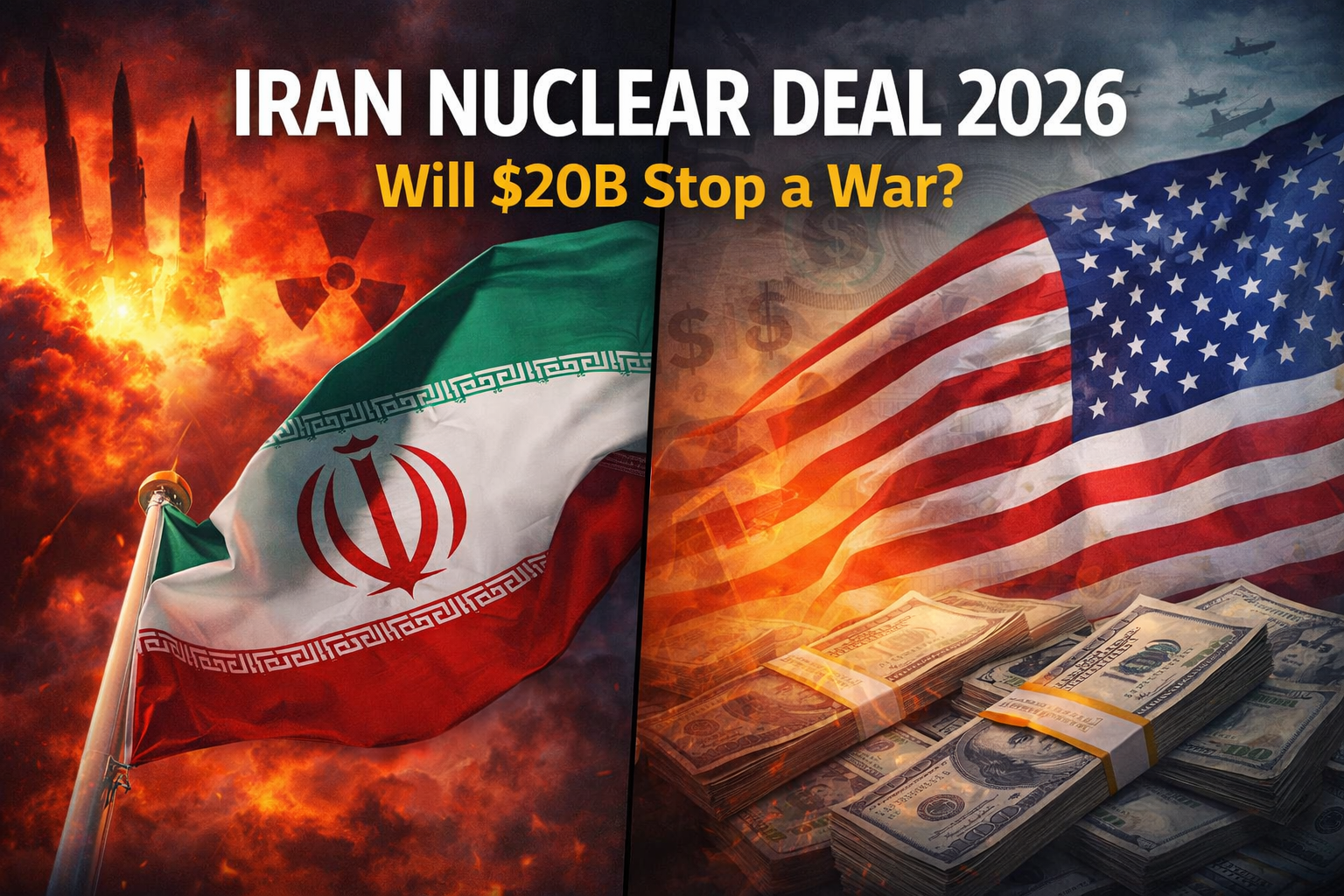
Sounds like it has all the makings of a movie. After 5 decades as sworn enemies, the United States and Iran are at a table in Islamabad, Pakistan, working out what will likely be the agreement that ends the current military conflict. On one side, the U.S. is asking Iran to give up its uranium. On the other side, Iran is asking for the release of its frozen billions. The countdown is on. The ceasefire expires on April 22, 2026. And everyone is watching.
But how did we get here? More importantly, can this agreement stand?
To understand what is happening today, you need to go back. Because the Iran nuclear deal did not start in 2026. It has a long and painful history of trust-shattered diplomacy, and that is why these current negotiations are so difficult.
Iranian/Western diplomacy is usually like a chess match where one side flips over the board. Agreements are made. Frameworks are signed. Then new political winds arrive, a new president arrives, and suddenly everything collapses.
The key Chapter in this narrative is the JCPOA, or the 2015 Joint Comprehensive Plan of Action. It was an historic agreement between the U.S., under President Barack Obama, and six major countries (China, France, Germany, the Russian Federation, the UK), that created a comprehensive arrangement with Iran.
Iran is committed to specific and detailed terms. Specifically, Iran agreed to limit uranium enrichment to 3.67% and reduce its total amount of enriched uranium; in addition, Iran agreed to allow ongoing monitoring of its nuclear activities by inspectors from the International Atomic Energy Agency (“IAEA”). As part of this agreement, the economic sanctions imposed upon Iran by virtually all nations around the globe were removed. This plan was intended to create sufficient time for Iran to build a nuclear bomb before it could be deployed, known as Iran’s “breakout time.”
This “breakout time” had been reduced from approximately two months before the signing of the agreement to one year after the signing of the agreement.
Did the agreement accomplish its goal? The answer according to the IAEA is Yes.
Washington provides approximately $20 billion in previously frozen Iranian funds. In exchange, Tehran will surrender its enriched uranium stockpile. Additionally, both parties agree to an enrichment moratorium; however, all of Iran’s underground nuclear facilities will be closed.
Sounds easy? Not at all. Each provision has a ‘catch.’
This agreement should be viewed as a hostage situation with each party possessing the other’s most valuable asset(s). The United States wants Iran’s uranium. Iran wants its money. Neither party fully believes the other, and for a good reason. Iran has seen how the U.S. walked away from a previous nuclear agreement. The U.S. has witnessed Iran increasing the concentration of enriched uranium to 60 percent purity, despite repeated warnings.
Iran obviously desires the $20 billion and much more. However, they also desire their nuclear weapons development program. Furthermore, they do not wish to relinquish enough of that program to receive what we are offering. A senior official in the U.S. government, April 2026
It has been forty-seven years since U.S. and Iranian leaders engaged in direct, high-level negotiations, a feat accomplished on April 11-12, 2026, in Islamabad, Pakistan. There, Vice President JD Vance and Iran’s parliament speaker Mohammad Bagher Ghalibaf met with Pakistani mediators as part of an effort to reach some sort of agreement.
The talks were protracted for 21 long days; however, they ultimately collapsed when Vance announced that Iran had made no significant concessions. Specifically, the United States demanded Iran abandon its uranium-enrichment program entirely, while Iran refused to do so. As far as Iran is concerned, enrichment is a non-negotiable right granted by the Constitution as part of the country’s right to self-determination.
This particular event stands out from previous failures because even though the two countries could not come to terms, they continued talking. Pakistan’s head of its armed forces went to Tehran. Turkey, Egypt, and Qatar are also using diplomatic shuttles to facilitate further talks between the parties. Even President Trump stated publicly he believed the deal was “very close.”
One of the truly unique (sub)plots in the current crisis is how effectively Pakistan has established itself as an honest broker. For decades, Pakistan has developed relationships with both Washington and Tehran; for that reason alone, it is one of the very few countries that can act as a bridge. In fact, since the crisis began, Pakistani military Chief Field Marshal Asim Munir has been making the rounds between capitals; on at least one occasion, he was able to meet with Iran’s President, Parliament Speaker, and IRGC Commanders all in the same day!
That represents a major shift in terms of Pakistan’s role in international diplomacy. Typically, Pakistan’s attention and energies are consumed by regional issues/pressures; however, currently, Pakistan is acting as a message carrier regarding potential conflict in the region; what happens next may well be determined by what Pakistan communicates about possible Middle Eastern War. At the same time, PM Shehbaz Sharif was able to rally in support of Saudi Arabia, Qatar, and Turkey to work together to help avoid disaster. That is no small country diplomatic effort.
Many have focused on the Uranium, but there is another looming crisis that could disrupt the whole deal: the Strait of Hormuz.
The narrow body of water connects the Persian Gulf with the Arabian Sea, which carries approximately twenty percent of global crude oil and liquefied natural gas (LNG). As for the decline in oil shipments through the Strait since February 28, when the war began, tanker companies will not risk sending their tankers. Energy markets are being rattled, and oil price volatility is rising as well.
Global supply chains are also beginning to fray around the edges. Iran militarily controls access to the Strait, and it understands that the military control of the Strait is its strongest bargaining chip. The U.S. has now issued orders to establish a naval blockade, which constitutes a dramatic escalation that makes a direct naval engagement highly likely. This is a direct threat to economic stability for those countries that rely heavily upon oil from the Gulf, Japan, South Korea, India, and many European nations.
That is essentially the main question – but the response will certainly not be a straightforward one.
The optimists say yes. Economic incentives have historically been the best tool in foreign policy. The sanctions against Iran have devastated its economy over the years. Its currency has crashed. Ordinary Iranians are being hurt. A $20 billion dollar influx of cash, plus Iran selling its oil on the open market and regaining access to the world financial system, is as close to a physical transformation of Iran’s economic situation and thus of its politics as you can get. This is exactly the type of real, tangible advantage that would cause politicians inside Tehran (including some of the hardliners) to think about their options differently.
The skeptics argue that Iran has made too great an investment in this nuclear program. For many people in the Iranian elite, having the capability to enrich uranium is far beyond merely a military option. It represents for them, and for many others in Iran, a sign of technological independence and national pride. A 20-year moratorium would represent an extraordinary commitment of time from a nation whose distrust of the U.S. government’s honoring its agreements has been demonstrated so clearly in recent times. Iran has seen this show before. In 2018, the International Atomic Energy Agency confirmed that Iran had complied with all aspects of the Joint Comprehensive Plan of Action. And then President Donald Trump canceled it.
Iran now finds itself at a crossroads: give up its greatest negotiating tool for what may end up being a short-lived agreement because the next U.S. president will likely cancel the current agreement the moment he or she takes office. That is not paranoia. That is simply understanding the past ten years.
An awful lot is going on here. Each item listed above must occur at the same time. If any part does not function properly, then this agreement collapses.
This is far from a simple bilateral dispute; instead, the Iran nuclear agreement represents a focal point for many of the key international relationships that are likely to define the early 21st century.
Israel: Iran’s nuclear program was attacked by Israel via airstrikes, which prompted this current conflict. And while it has been stated that Israel will have no issue with a nuclear-armed Iran (under any conditions), there are also reports that even a limited or “partial” agreement that allows Iran to maintain some level of enrichment capabilities will not appease Jerusalem, and Israel remains militarily capable of acting unilaterally.
Russia: Moscow has once again entered into these talks and has offered to remove Iran’s stockpiled enriched uranium, a development similar to that seen in Moscow’s prior involvement in the initial Joint Comprehensive Plan of Action (JCPOA) talks. While the Russian proposal may offer a practical technical resolution to the enrichment question, the added complexity created by the addition of another major world power (to include China) complicates matters greatly.
China: Reports indicate that China is considering providing additional advanced air defense systems to Iran. If such arms were delivered, they could significantly alter the military balance of forces in favor of Iran — and could potentially destroy any momentum built up through diplomatic channels. President Trump has warned that severe consequences would follow if Beijing proceeds with this potential action.
Saudi Arabia: The Saudi government has praised the talks as a means of limiting Iran’s ability to develop a nuclear capability. Given the history and animosity existing within the broader context of their own regional rivalry with Iran, the Saudis wish any eventual agreement to address not simply the Iranian nuclear program, but also Iran’s support for militant/terrorist organizations throughout the region.
It is not a chess game played out between two opposing sides; it is more akin to seven people playing chess simultaneously on the same board, each side playing with their own rules/objectives. That is why finding a mutually acceptable/diplomatic solution to this dispute is so difficult and why achieving success in doing so is of such immense importance.
Why is Iran’s enriched uranium stockpile so alarming?
Beginning in early 2026, Iran will have about 2,000 kg of enriched uranium, with nearly all 450 kg being at 60% purity. At 60%, this is far from the weapon-grade level (over 90%), but it has been reported by the IAEA that the breakout time of Iran could be less than a week. It is this proximity to the weapons level that is the primary cause for U.S. and Israeli concerns.
What was the original JCPOA (2015 Iran nuclear deal)?
Iran and the five permanent members of the UN Security Council, plus Germany, entered into an agreement known as the Joint Comprehensive Plan of Action (JCPOA) in July 2015. In exchange for lifting many international sanctions against Iran, Iran agreed to enrich its uranium to no more than 3.67 percent and permitted inspectors from the International Atomic Energy Agency (IAEA) to inspect and monitor its nuclear facilities.
This agreement increased the amount of time required for Iran to produce enough enriched uranium for one nuclear device to almost a year. When the United States withdrew from the JCPOA in May 2018, under the direction of then-President Donald J. Trump, there had been numerous reports indicating Iran continued to comply with the terms of the agreement, and therefore did not need to restart its nuclear program.
What happens if the Iran nuclear deal talks fail?
In the event negotiations fail before the April 22 ceasefire date, the first action taken by the U.S. or Israel would likely be a resumption of their aerial attacks upon Iran. There are several other possible consequences of such actions over longer periods of time. They may include an increase in violence committed by Iranian proxies operating within Lebanon, Yemen, and Iraq.
There could also be a conflict involving Iranian naval forces and shipping interests in the Strait of Hormuz. Such a conflict could lead to disruptions in the global flow of crude oil. And finally, if Iran decides to speed up development toward producing nuclear weapons, there is a risk that there could be a broader regional conflict in response.
Disclaimer: This article is for informational and educational purposes only. It reflects analysis based on publicly available geopolitical developments and does not constitute prediction or professional advice.
Want More Guides on International Relations? Check out this One