Newsletter Subscribe
Enter your email address below and subscribe to our newsletter

Enter your email address below and subscribe to our newsletter
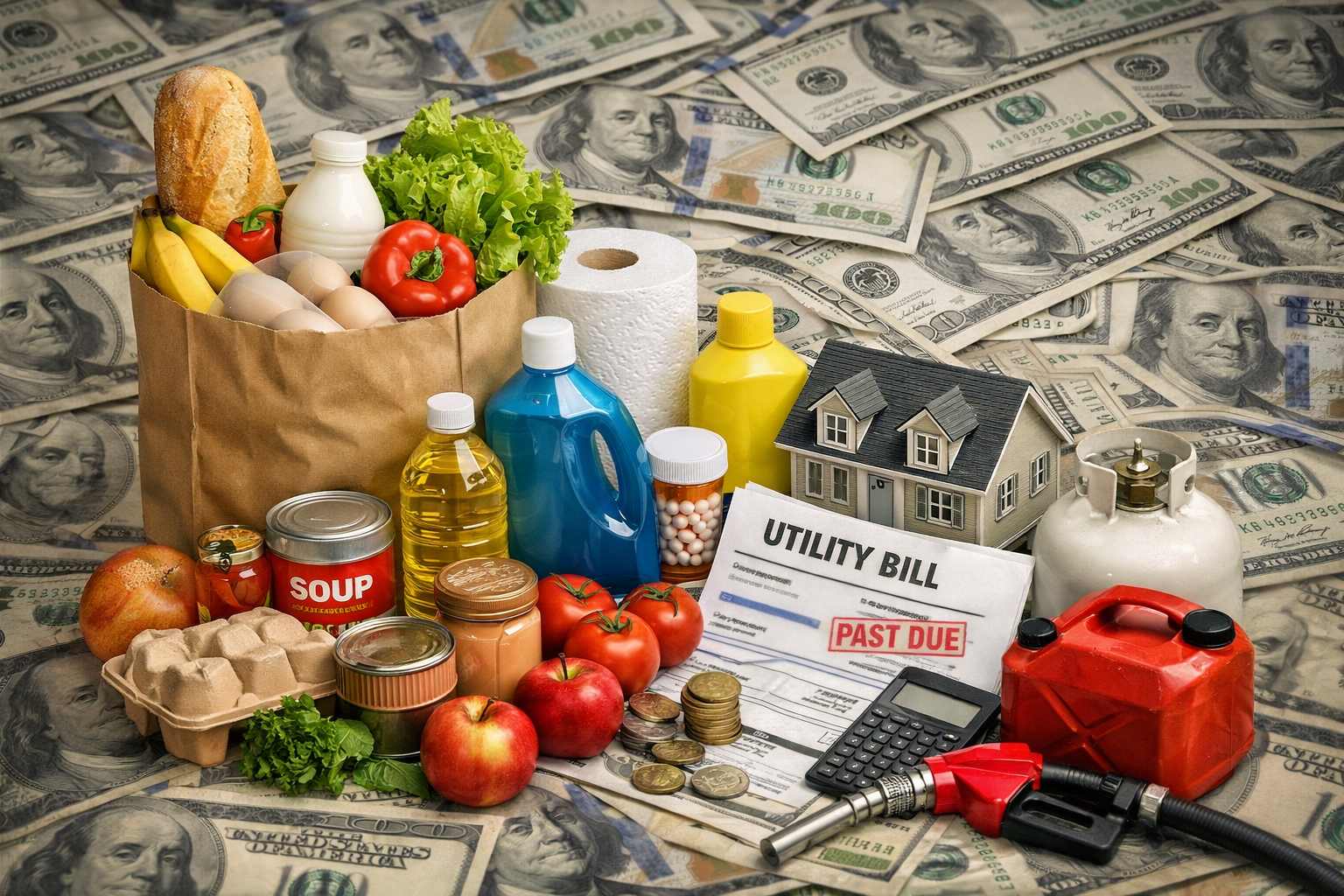
If you look at the numbers, inflation rates are dropping, unemployment rates are falling, and Gross Domestic Product growth is strong, then ask yourself, “Why does everything seem to be costing me more?” Millions of Americans find themselves facing an increasingly difficult time trying to afford their daily lives, and that is the question that tens of millions of Americans are trying to figure out as well.
The U.S. cost-of-living crisis began before 2026, but since its inception, it has developed deep root structures, essentially a slow-moving contraction that is fundamentally altering how everyday families shop for food, rent homes, pay medical costs when they fall ill, or if they continue to believe they can advance economically.
This is not simply an issue of data. This is also Mary Dres, a respiratory therapist working in Indiana; she sits in the dark because it saves her electric bill, while her electric bill is nearly twice what she paid last year. It is seven in ten American parents stating they cannot afford to raise children. It is a nation whose statistical realities grow greater by the day relative to what citizens perceive regarding their quality of life.
What is this confusing paradox at the core of the United States economy today?
On paper, we can see that the inflation rate (headline) has slowed to somewhere between 2.4 and 2.7 percent.
The Federal Reserve has been able to accomplish most of what was asked for in terms of cooling price spikes post-pandemic. However, a survey conducted recently found that almost 2/3 of all Americans reduced grocery shopping to lower costs; nearly as many cut back on groceries completely; and approximately one-half had to use their savings simply to pay for basic living expenses.
So how do these two seemingly contradictory things equate? Easy: the numbers reflect one thing, while the actual consumer experiences represent another thing entirely.
The basic wage story behind the cost-of-living crisis has developed over time and has continued to build since 1979.
Productivity in the U.S. economy increased by approximately 73 percent from 1979 to 2019. Wages for the average middle-income worker have grown by only 23 percent. In 1
979, a retail employee was making approximately $14.60 (in today’s dollars), while as of 2019, they were earning about $17.40, or just a 19% increase. As for the top 1%, their wages increased by almost 170% during this same period.
Did You Know?
U.S. natural gas prices increased more than double compared to wage increases over the last year? Energy bills for tens of thousands of households were nearly doubled, just due to rising costs from an increasingly expensive system.
When the price of goods began to rise rapidly during the 2021-2022 inflation period, employees received their largest nominal pay increase in over ten years. Even with this significant increase, however, employees lost the ability to purchase things due to increasing prices. What employees’ wallets told them was different from what the check labeled it: the raise.
For now (as we are writing this in 2026), real wages have begun to grow positively once again. The last year saw a gain of approximately .006 to .007 percent in inflation-adjusted wages. This is good news on paper. However, decades of erosion do not disappear quickly. There is a serious emotional trauma associated with a long-term loss of trust regarding pay increases, which cannot be felt when making a trip to the grocery store.

1- Housing: “The wall no one can jump.”
Housing costs are one of the largest expenditures in many U.S. household budgets. It’s not just that they’re expensive; they’ve become fundamentally broken.
Since 2001, rents grew by 30% and incomes by only 9% (in real dollars). Residual income after paying rent dropped 60% to a record low of only $210 per month. This leaves very little money available for groceries, health care, transportation, and other things. And it gets worse.
For decades, homeownership was often considered the way to get out of rental housing. But today, homeownership is unaffordable for most families. In February 2026, a congressional hearing testified that 77% of all U.S. households couldn’t afford the median price of a new single-family home. 77%. Median monthly owner costs for mortgaged homes increased to $2,035 in 2024.
Additional tariffs: an additional cost to build
Tariffs on Canadian lumber, Chinese steel & aluminum add approximately $7,500 to $17,500 to the cost of building a new home. Stricter immigration enforcement adds less skilled immigrant labor to the construction workforce, which is further increasing the cost to build homes. Tariff-related construction pressures could reduce new housing completions by up to 450,000 units through 2030.
If you picture a clogged pipe, that is basically how I see the housing market. Demand builds. Supply can’t catch up. Price stays high. More people rent. Rent stays high. Pipe won’t clear itself.
2. Tariffs: the slow-burning tax on every product
The 2025 tariff regime, with its focus on products coming into the country from China, Canada, and Mexico, was sold as protectionism for American industry. For consumers, though, it works more like a slow-burning tax on every physical thing we buy. With a new 25% tariff on Canadian lumber and Mexican drywall, a 20% tariff on Chinese steel and appliances, and a host of additional tariffs on dozens of other product categories, tariffs are being felt throughout supply chains. Before this measure, prices for building materials were already 33% higher than before the pandemic.
According to projections at The Yale Budget Lab, if countries reciprocate, tariffs will be reduced by $2,721 in average annual household disposable income. According to the Federal Reserve, almost all (nearly 100%) of the costs imposed by tariffs are passed along to consumers in the form of increased prices; there is essentially no cushion.
3. Energy/geopolitics: the X-Factor
While it may seem like hyperbole, geopolitically driven shocks to oil supplies have caused an explosive rise in energy prices in early 2026. Look at the numbers from the March 2026 CPI data. The energy component increased by 10.9%, with gasoline increases of 21.2%, accounting for nearly 75% of last month’s total price increase.
This is called “embedded inflation”. Companies raise their prices not due to current necessity but based on expectation. When that happens, even a normal supply chain does nothing to decrease those prices. While the Fed can raise interest rates to temper demand, it can do nothing regarding blocked shipping lanes or global energy crises.
4. Healthcare: Another Budget Crisis
Millions of Americans have another financial crisis, outside of the overall cost-of-living crisis, with regard to their healthcare expenses.
Healthcare premiums for employees with employer-sponsored health plans will be increasing by approximately 6-7 percent in 2026, which is greater than the present rate of inflation. Costs associated with private health insurance have almost doubled since 2008. Individuals whose health plan subsidies through the Affordable Care Act (ACA) ended in late 2025 were forced to go uninsured.
The consequences of this cost-of-living crisis have already started to show. Approximately nine percent of Americans delayed or avoided medical treatment over the past year. Almost fifty percent of young adults ages 18-29 had similar experiences. Twenty-five percent of individuals delayed obtaining prescription medications from doctors because they could not afford them.
Thirty-seven percent of Hispanic Americans delayed or avoided medical treatment last year. Thirty-two percent of African Americans experienced similar issues. Women are two times more likely than men to avoid prescriptions due to expense.
5. Death by a Thousand Cuts
A portion of rising costs does not cause individual economic crises; however, when combined, these costs will deplete family income. This trend is referred to as service price inflation.
As of early 2026, virtually all major streaming services increased pricing. Labor costs for home repairs and healthcare rose almost 10% per annum due to shortages of skilled workers. Prices for home insurance, electrical usage, and digital subscriptions also increased. While these costs may appear small individually ($2 here, $15 there, etc.), collectively, these costs are overwhelming for families that live paycheck to paycheck.
This trend disproportionately affects lower-income families. When the price of a luxury watch increases, a few consumers experience an impact. When utility, insurance, and food prices increase simultaneously, it creates a form of progressive taxation – affecting those who can least afford it the greatest.
The cost-of-living crisis is much more than an economic issue; it’s a massive political seismic shift occurring at a snail’s pace.
Incumbent Parties throughout the World Were Punished By Voters In 2024 Because Of High Prices. That trend is still playing out in 2026. Most workers feel like they earn a pay raise, but if there are higher prices in the community, most will feel that those prices were forced upon them. Regardless of whether or not the net math supports a higher price (i.e., workers’ earnings went up), this creates an enormous imbalance that results in long-term cost-of-living crisis frustration, which becomes very difficult to quell from a political perspective.
Minimum wage ballot initiatives, when they’ve been placed before voters, have almost always resulted in a “yes” vote in both red and blue states and purple states. When states raised their wage floor, the overwhelming majority of workers benefited, despite the many predictions of job loss due to such actions. There is mounting research that indicates careful design of demand-side economic relief can be effective.
However, structurally addressing monopsony (the power of large employers to reduce wages without causing workers to lose jobs) is a longer-term project that spans multiple generations, rather than a short-term political solution.
As we look to the second half of 2026, several factors will ultimately dictate whether the cost-of-living crisis worsens or if some easing occurs.
The biggest variable factor on energy costs is the geopolitical pressures that continue to push oil towards $112/barrel. While there is no guarantee this will occur, if these pressures were to dissipate quickly, the largest pressure point on consumers would likely ease. This is an optimistic view.
Housing, while having a slight glimmer of hope (asking rents for professionally-managed apartments decreased somewhat at the end of 2025), has its own set of challenges. Cities located in the Southern & Western regions of the U.S., where new developments have been built in large numbers, are beginning to see actual relief from rent pressures. However, despite a decrease in rents in some areas, the underlying issue of a massive structural housing shortage continues to exist. Tariff-driven construction cost increases are also now threatening to eliminate any gains made through decreases in asking rents.
Wages. As evidenced by the tight labor markets experienced during 2021-2023, when employees possess bargaining power, they can increase their wages, including low-wage earners at a higher rate than high-wage earners, resulting in an overall compression of income inequality. The question is whether this wage growth trend can be recreated or maintained over time as we move into a different economic climate.
One thing that most assuredly will NOT improve quickly is the psychological damage inflicted upon people who have watched wages fail to match price inflation. It will take years for people to regain trust in the economy after experiencing such prolonged periods of stagnation in wages relative to prices. People typically perceive economic realities about 2-4 years behind what is occurring in the economy, which means even legitimate improvements in 2026 may not initially be perceived as improvements by the general public.
It is an economic crisis with no one cause or solution. Structural wage stagnation, a broken housing market, energy price shocks from geopolitics, supply chain disruptions caused by tariffs, and the most punitive health care system for average Americans have all come together to create this U.S. cost-of-living crisis.
Regardless of how many statistics may show otherwise, the people who live in darkened houses so they do not use as much electricity, who put off going to see a doctor, who buy fewer groceries and watch their savings dwindle to meet their monthly living costs are telling a very different story. And that is where a democracy comes into play. At some point, that story will turn into policy. That being said, I am not saying whether there will be a political change due to the cost-of-living.
I am simply asking the question: Will those changes fix the structural problems – or will we just be shuffling around the deck while we continue to feel the squeeze?
The American dream was never just about work ethic. The American Dream was always about work ethic and advancement. Millions believe this bargain has been broken. To fix this cost-of-living crisis, it will take more than a trend showing us the way to go.
Disclaimer: This article is for informational and educational purposes only. It reflects analysis based on publicly available geopolitical developments and does not constitute prediction or professional advice.
Want More Guides on Contemporary Politics? Check out this One